

Brand Digital Channel Expansion
Industry
Wine
Country
Spain
Date of Completion
31 December 2024
Time Period
1 Year
Case Study Slides
Further Reading
More Case StudiesGo To My BlogHow a Premium Wine Producer Cracked the Digital Expansion Code Without Losing Its Soul
A systematic approach that transformed a risky venture into a €15 million growth opportunity
The Premium Brand Paradox
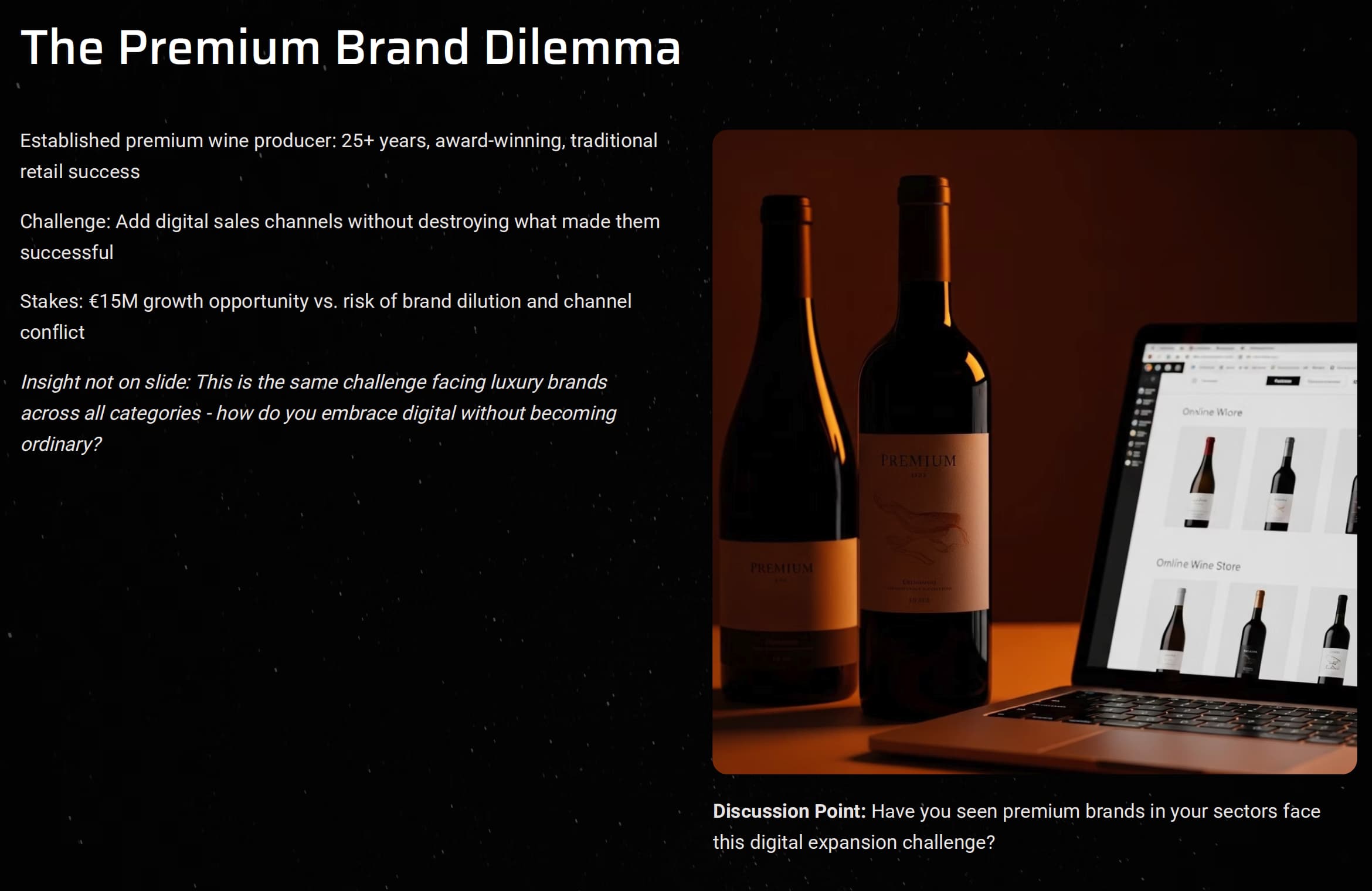
You’ve built something remarkable. Twenty-five years of crafting award-winning wines, cultivating relationships with premium retailers, and establishing genuine brand equity in a crowded market. Your board sees the digital opportunity—and they’re not wrong. There’s real money on the table.
But here’s the rub: how do you embrace digital channels without destroying everything that made you successful in the first place?
This isn’t just about wine. It’s the same challenge facing every premium brand today. Luxury fashion houses are questioning direct-to-consumer strategies. High-end consultancies evaluating online service delivery. Boutique manufacturers are considering e-commerce platforms.
The stakes are genuine. Get it right, and you’ve unlocked sustainable growth whilst strengthening your competitive position. Get it wrong, and you’ve diluted decades of brand building for short-term revenue.
This case study demonstrates how systematic strategic thinking transformed this classic dilemma into a €15 million competitive advantage.
The Market Reality: Why Digital Isn’t Optional Anymore
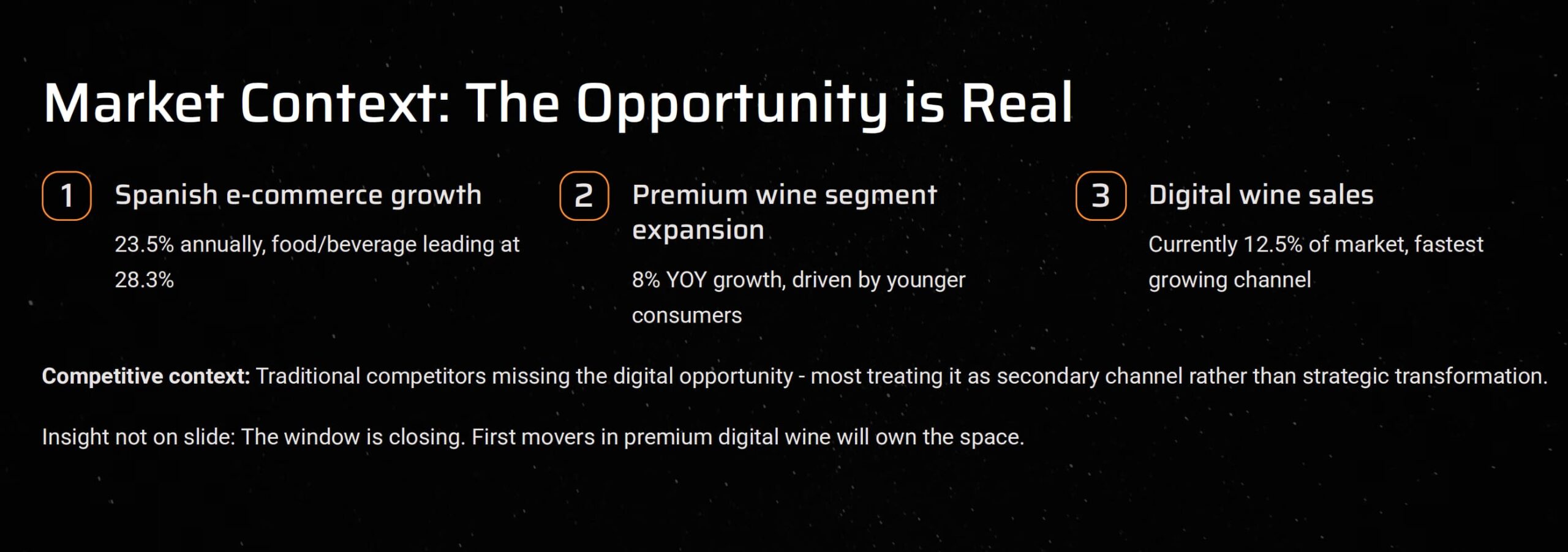
Before developing any strategy, we needed to establish the facts. Three data points changed everything:
Spanish e-commerce is experiencing explosive growth: 23.5% annually, with food and beverage leading at 28.3%. This isn’t a niche trend—it represents fundamental consumer behaviour change.
The premium wine segment is expanding: 8% year-over-year growth, driven predominantly by younger consumers who combine digital nativity with genuine spending power.
Digital wine sales are accelerating: Currently 12.5% of total market value but representing the fastest-growing channel, whilst established players treat it as secondary rather than strategic.
Here’s what caught our attention: traditional competitors were missing the opportunity entirely. Most premium wine producers are viewed online as an afterthought rather than a strategic transformation opportunity.
This created a genuine first-mover advantage for brands willing to invest systematically. But the window is closing rapidly.
The Framework: Six Steps to Strategic Clarity
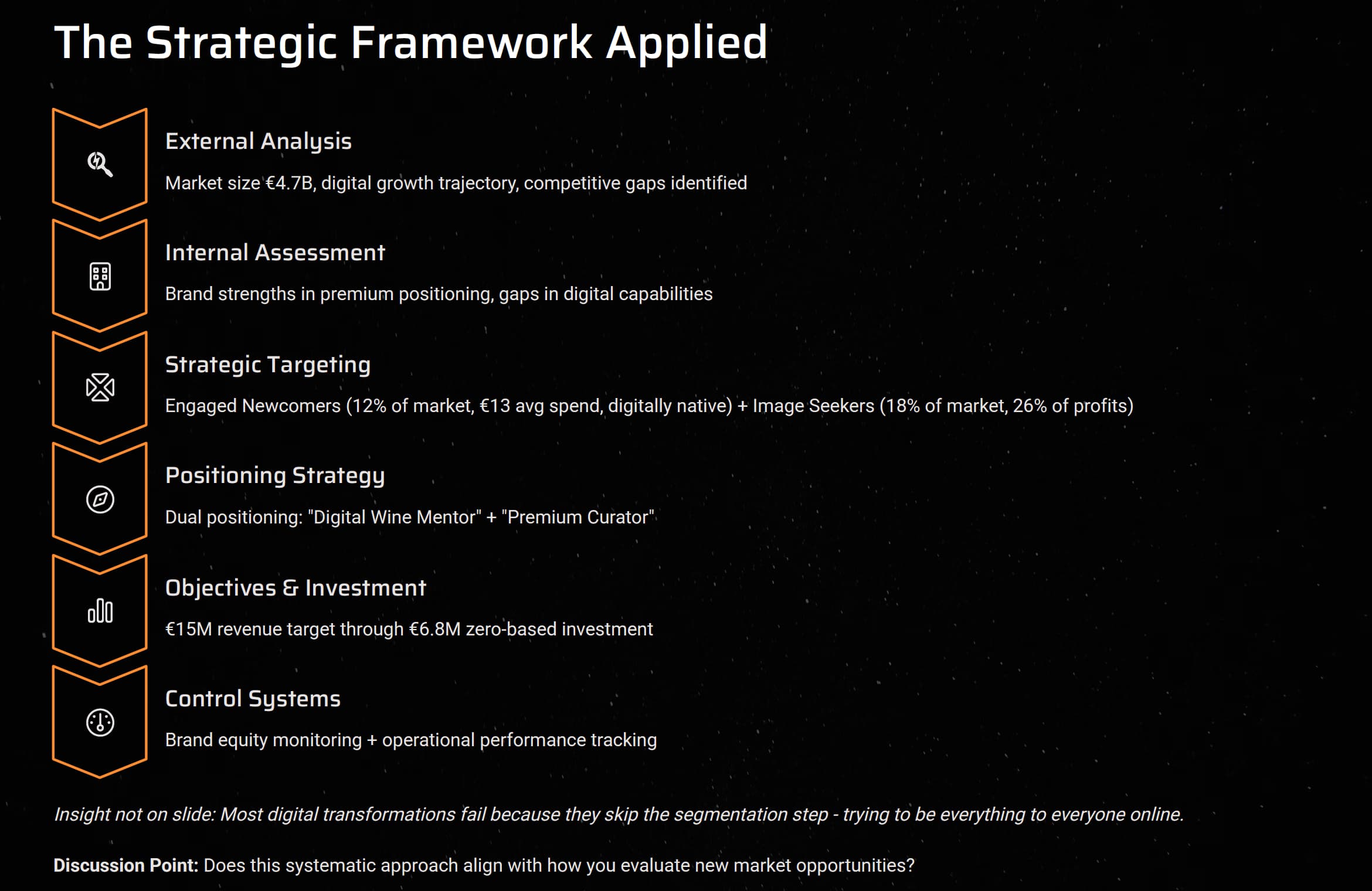
Rather than jumping straight into digital tactics—a common mistake that kills premium positioning—we applied our proven diagnostic methodology:
Step 1: External Market Analysis
Comprehensive research revealed a €4.7 billion market with a clear digital growth trajectory and significant competitive gaps. Crucially, this represented structural market shifts rather than temporary trends.
Step 2: Internal Capability Assessment
Our brand audit identified strong foundations in premium positioning and product quality, but significant gaps in digital infrastructure and customer data systems.
Step 3: Strategic Customer Targeting
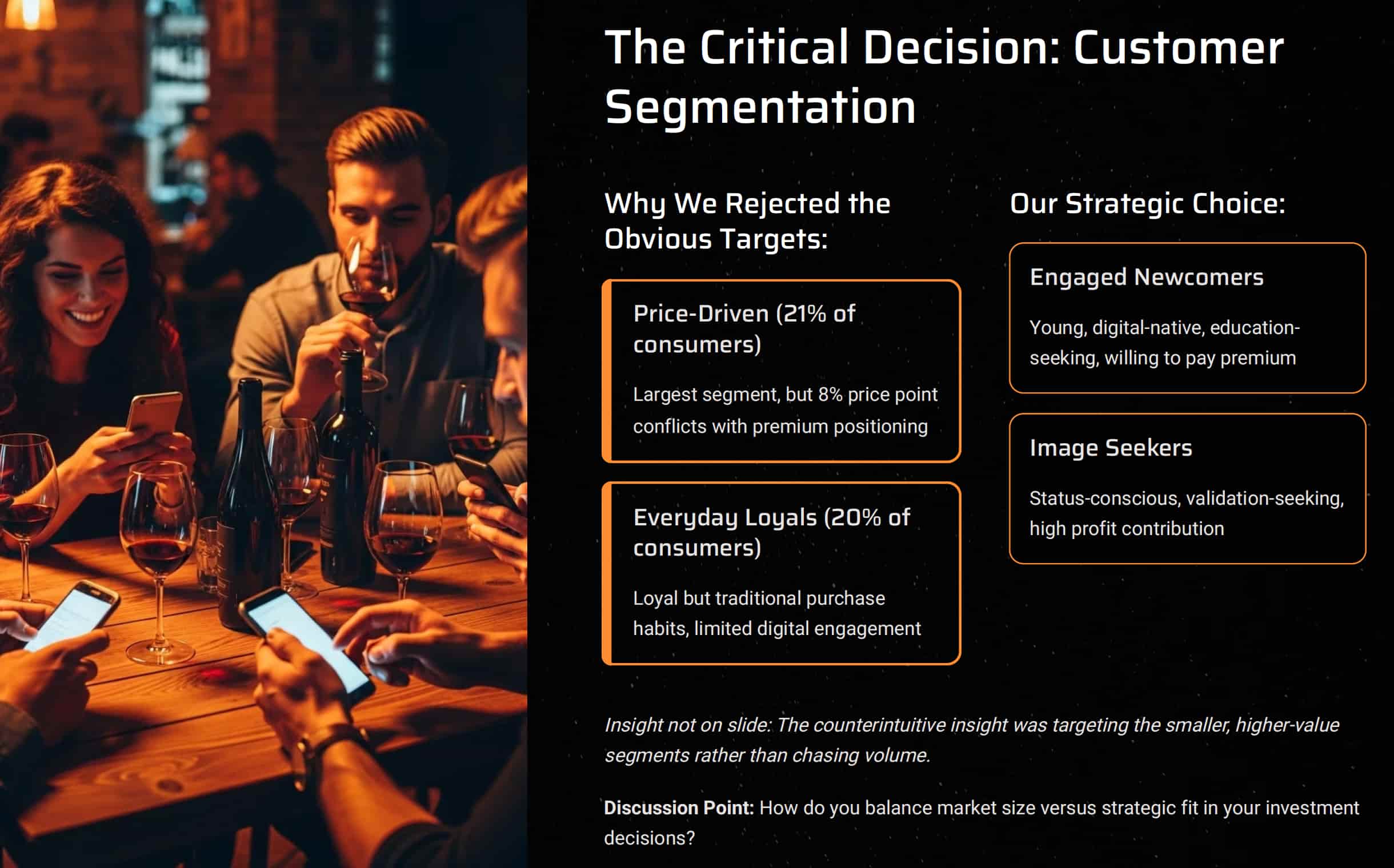
This proved to be the most critical decision. Using established consumer segmentation frameworks, we identified two primary targets whilst deliberately rejecting the obvious choices:
Our Strategic Choices:
- Engaged Newcomers (12% of market): Young, digitally native consumers with €13 average spend per bottle and active education-seeking behaviour
- Image Seekers (18% of market): Status-conscious consumers contributing 26% of industry profits, with strong validation-seeking patterns
Why We Rejected the Obvious Targets:
- Price-Driven consumers represented 21% of the market, but their €8 price point directly conflicted with premium positioning
- Everyday Loyals comprised 20% of consumers but showed limited digital engagement despite loyalty potential
This decision exemplifies strategic discipline: choosing quality over quantity in target market selection.
Step 4: Dual Positioning Strategy
We developed complementary positioning approaches:
- “Digital Wine Mentor” for Engaged Newcomers seeking education and discovery
- “Premium Curator” for Image Seekers requiring status validation and expert endorsement
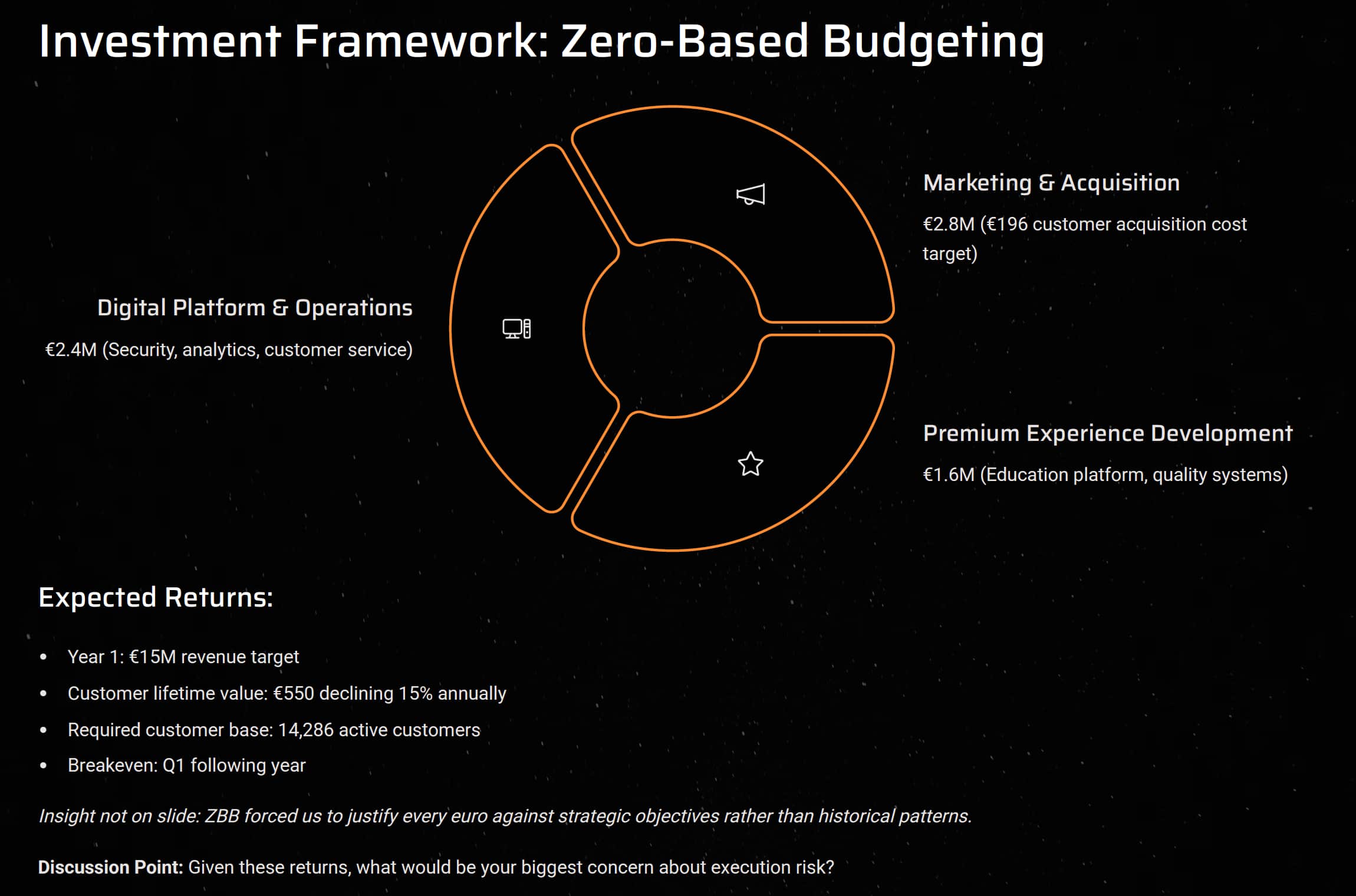
Step 5: Investment Framework
€6.8 million zero-based investment targeting €15 million revenue return, with every pound justified against strategic objectives rather than historical patterns.
Step 6: Measurement Systems
Comprehensive tracking combining brand equity monitoring with operational performance metrics, designed to catch problems early rather than simply report results.
The Investment Decision: Why Zero-Based Budgeting Matters
Traditional budgeting extrapolates from historical patterns, but digital transformation requires justifying every investment from first principles.
€6.8 Million Total Investment Breakdown:
- Digital Platform & Operations (€2.4M): Security systems, analytics infrastructure, customer service capabilities
- Marketing & Acquisition (€2.8M): Targeting €196 customer acquisition cost based on lifetime value calculations
- Premium Experience Development (€1.6M): Educational platform creation, quality control systems, premium delivery infrastructure
Expected Returns:
- Revenue Target: €15 million annual sales by December 2024
- Customer Economics: €550 lifetime value with 15% annual attrition
- Scale Requirements: 14,286 active customers generating an average of 6 orders annually
- Profitability Timeline: Breakeven expected Q1 following launch year
Zero-based budgeting forced us to justify every euro against strategic objectives rather than organisational inertia. This discipline ensured resource allocation aligned with value creation.
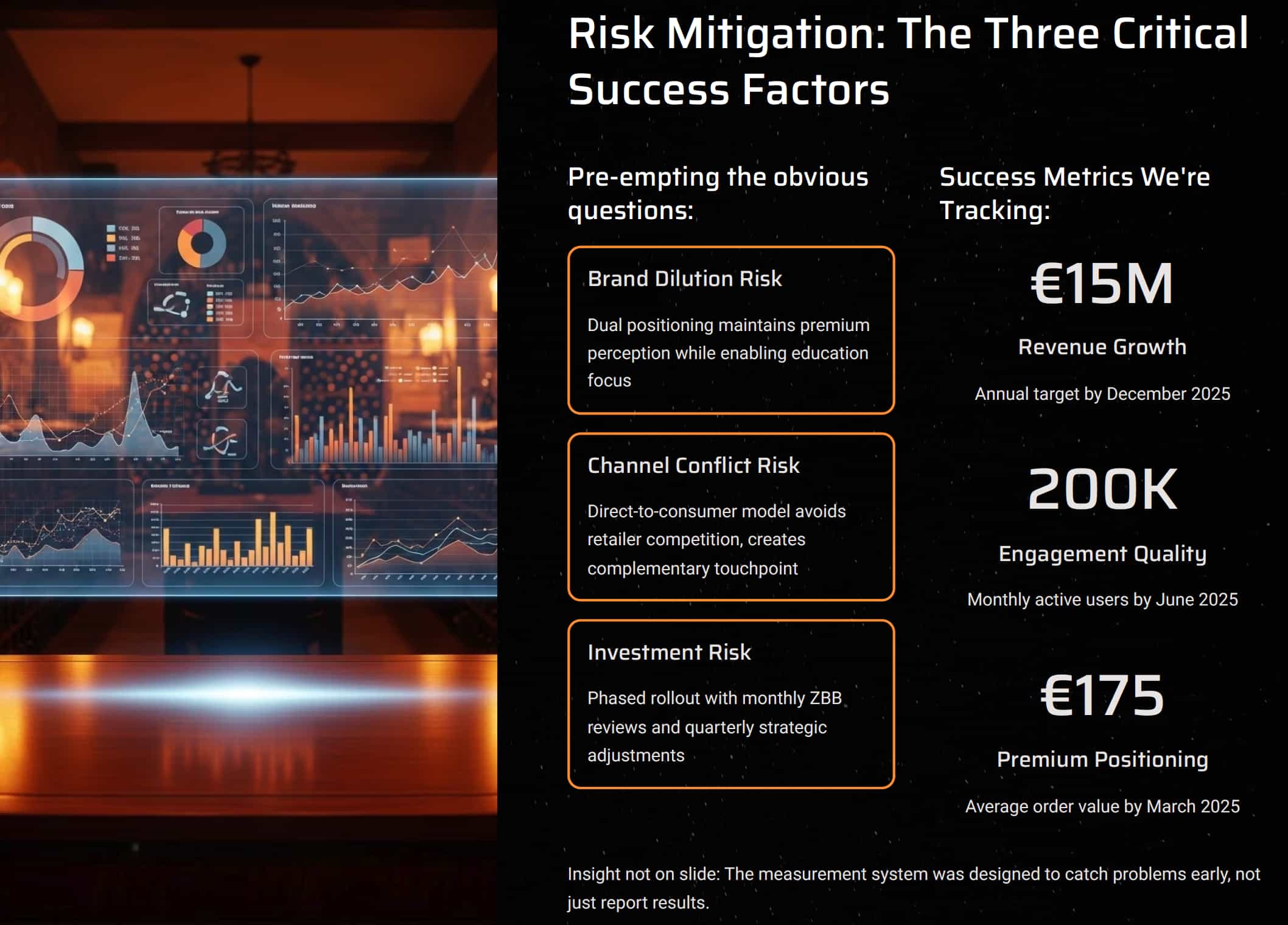
Risk Management: The Three Critical Success Factors
Systematic risk assessment revealed three potential failure modes and corresponding mitigation strategies:
Brand Dilution Risk
Challenge: Digital expansion could compromise premium perception
Solution: Dual positioning strategy maintains premium perception whilst enabling education focus, creating a coherent but differentiated brand experience
Channel Conflict Risk
Challenge: Digital sales could antagonise existing retail relationships
Solution: Direct-to-consumer model avoids retailer competition, creating a complementary touchpoint that drives traffic to retail partners
Investment Risk
Challenge: €6.8 million investment in an unproven market
Solution: Phased rollout with monthly zero-based budget reviews and quarterly strategic adjustments, enabling early course correction
Success Metrics for Early Warning:
- Revenue Growth: €15 million annual target by December 2025
- Engagement Quality: 200,000 monthly active users by June 2025
- Premium Positioning: €175 average order value by March 2025
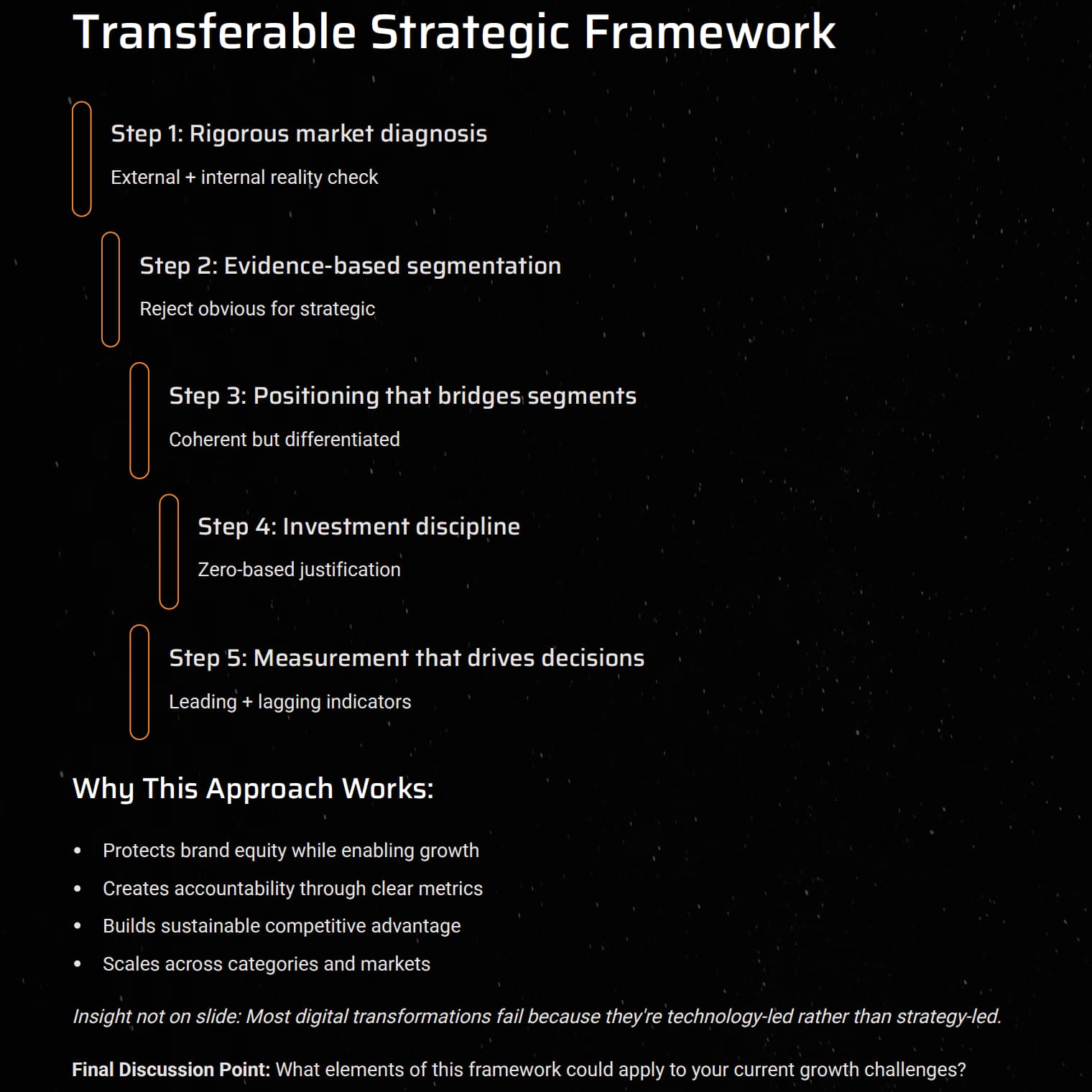
The Transferable Framework: Apply This to Your Business
This methodology works for any premium brand facing digital transformation challenges:
Step 1: Rigorous Market Diagnosis
Combine external opportunity analysis with internal capability assessment. Avoid assumptions—demand evidence for every strategic decision.
Step 2: Evidence-Based Segmentation
Reject obvious targets for strategic targets. Market size matters less than strategic fit and long-term value potential.
Step 3: Positioning That Bridges Segments
Create a coherent but differentiated brand experience that serves multiple segments without confusing the core value proposition.
Step 4: Investment Discipline
Zero-based justification ensures resource allocation aligns with strategic objectives rather than organisational inertia.
Step 5: Measurement That Drives Decisions
Combine leading and lagging indicators to enable proactive management rather than reactive reporting.
Why This Approach Works:
- Protects brand equity whilst enabling growth
- Creates accountability through clear metrics
- Builds sustainable competitive advantage
- Scales across categories and markets
Most digital transformations fail because they’re technology-led rather than strategy-led. This framework ensures strategic coherence throughout the implementation process.
Key Strategic Questions Answered
How do you balance market size versus strategic fit in investment decisions?
Strategic fit trumps market size in premium positioning. Large markets often require compromising brand values to achieve scale, whilst smaller strategic markets offer higher lifetime value and sustainable competitive advantage.
What represents the biggest execution risk?
Platform reliability during rapid scaling. Premium brands cannot afford service failures that compromise customer experience. Our phased approach with robust testing and gradual capacity expansion mitigated this risk whilst maintaining quality standards.
How does this framework apply to other growth challenges?
The methodology applies to any situation requiring growth without compromising the core value proposition:
- B2B companies expanding into new service areas
- Retail brands launching e-commerce capabilities
- Professional services firms entering new markets
- Manufacturing companies adding direct-to-consumer channels
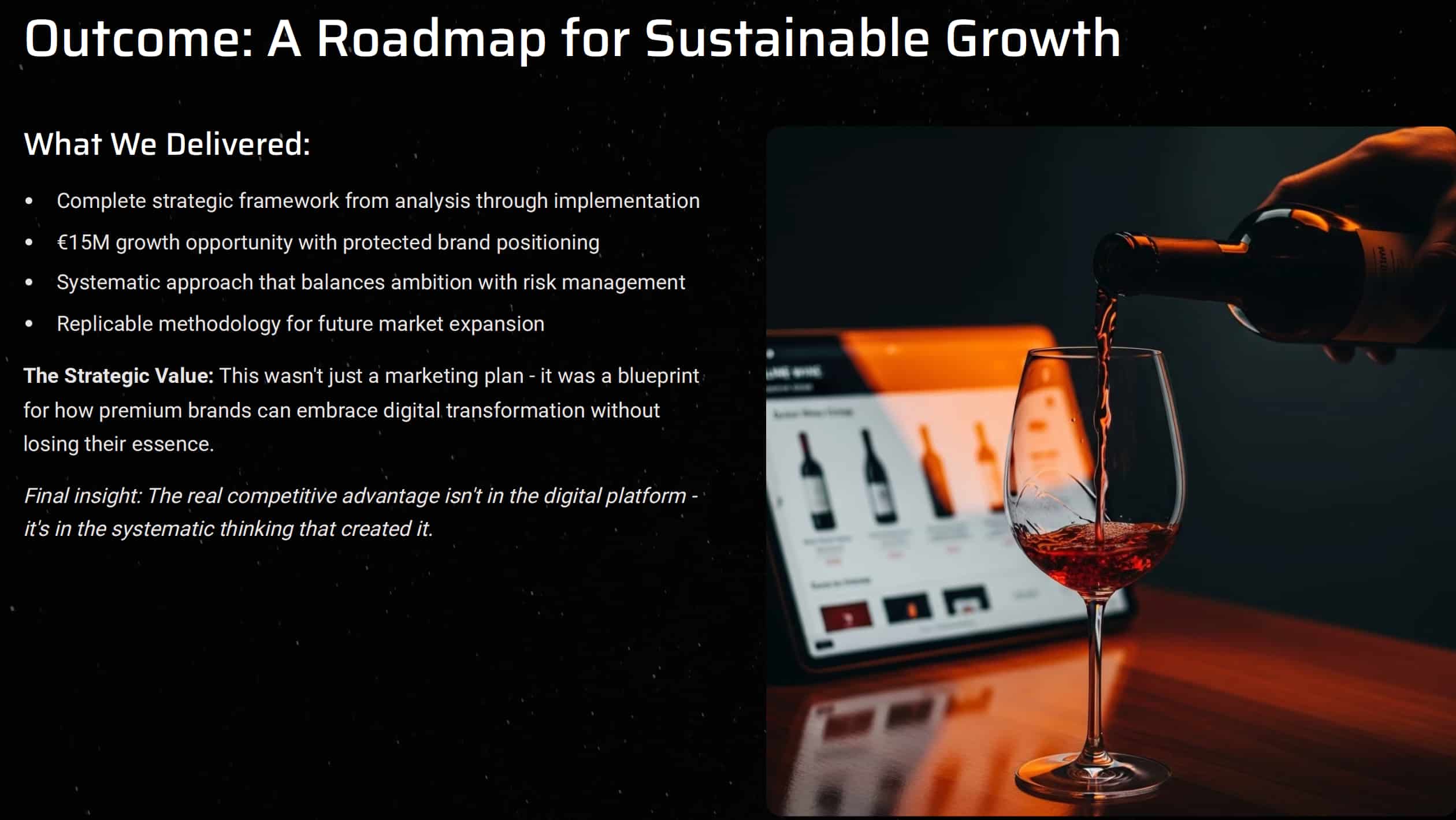
The Outcome: A Blueprint for Sustainable Growth
This case study demonstrates how systematic strategic thinking transforms complex business challenges into sustainable competitive advantages:
✓ Complete Strategic Framework: From market analysis through implementation planning
✓ Protected Growth Opportunity: €15 million revenue target with maintained premium positioning
✓ Risk Management System: Systematic approach balancing ambition with prudent risk management
✓ Replicable Methodology: Framework applicable to future market expansion initiatives
The strategic value extends beyond immediate results. This wasn’t just a marketing plan—it was a blueprint for how premium brands can embrace digital transformation without losing their essence.
The real competitive advantage isn’t in the digital platform itself. It’s in the systematic thinking that created it. Companies that master this methodology will consistently outperform those relying on intuition or copying competitor tactics.
Ready to apply systematic strategic thinking to your growth challenges? The framework is proven, the methodology is replicable, and the results speak for themselves.
Sebastian Jaensch, Strategic Marketing Consultant
Methodology: 6-step framework combining insights from Mark Ritson, Byron Sharp, and Scott Galloway